
Free Guide
Traditional vs. Digital Intervention Planning
- 6 questions to consider before selecting a digital platform
Executive Summary
Our personal and business lives are becoming
more digital every day. Technology is simplifying repetitive tasks and helping us to focus on the more complex areas where our expertise can really add value.
This guide reviews how digital technology can be used to improve the planning and execution of Well Intervention jobs using a digital end-to- end collaboration platform specifically designed to reduce the time Energy Company Engineers spend planning jobs, to ensure that they use the most up-to-date data and best practices and to allow them to take more time considering the best methods to complete the job effectively.

About the author
CHRISTOFFER SORENSEN
Christoffer is the Sales & Marketing Director in Stimline and has been involved in the Well Intervention industry since 2012.
Having first started as a Coiled Tubing Field Engineer for Schlumberger, Christoffer has been involved in all stages of planning, executing and evaluating intervention jobs both in the field and in client offices.
Christoffer’s passion for new technology and innovative solutions has seen him setting records in the North Sea and planning world firsts in West Africa. The focus for him now is to continue to understand the challenges that Oil Companies are having and demonstrate how Stimline’s solutions are already delivering value to current customers.

Intervention Operations Today
Operators are turning their attention to using more complex completion technologies on new wells and to maximising production from existing wells.
This is especially relevant as drilling new wells becomes more expensive and is viewed less favourably from an environmental perspective.
Whilst other domains such as prospect identification and drilling have had previous investment in digitalisation, the intervention workflows have been largely unaltered in the past 20 years, relying instead on experience of key individuals to deliver performance improvements over time.
This guide will highlight the experiences we have had working with operators to map their current workflows and then designing
a more collaborative digital workflow for future operations.
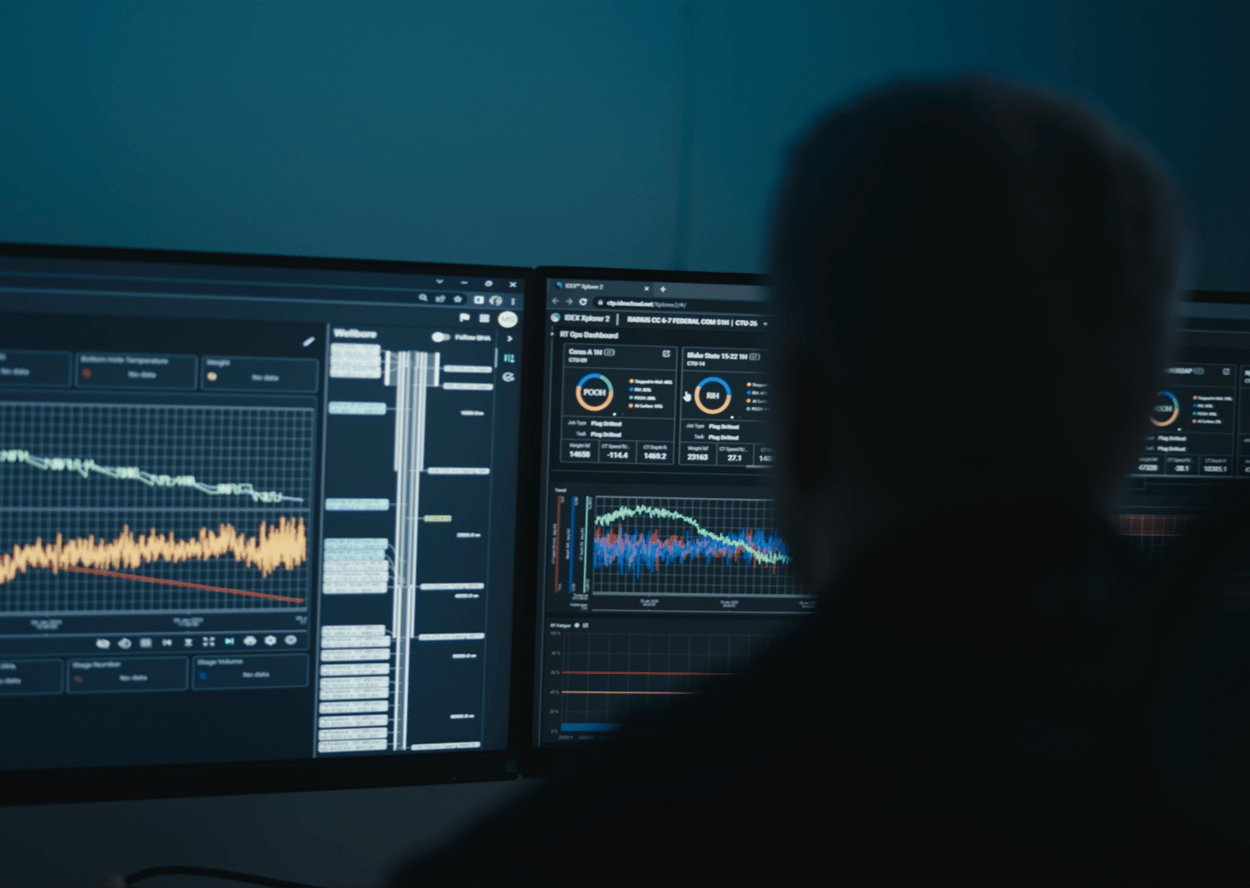
Classical vs. Digital
The Classical Way of Doing Things
Planning well interventions has been one of the later disciplines within the oil companies to benefit from a push to work collaboratively on a common digital platform.
Initially, a lot of focus was put onto the geology and geophysics domains with integrated workflows ensuring that the 3D earth
model was something that all team members were working on together.
Drilling, too, has seen some focus on improving workflows, especially around planning, simulating operations, and then using real-time data during a job to understand risks and deviations from the model.
Finally, as complex interventions start to feature more prominently in oil company key performance indicators, the diverse team working on the plans for interventions are being given the opportunity to work in a more integrated fashion – on common digital platforms such as those we use in our everyday lives.
Let’s investigate each stage of the process and compare the existing practices with what is possible with a current digital solution.
Planning
Planning an intervention job requires a lot of information from different disciplines to be collected and reviewed. From that, different methods to achieve the job goals are considered and ranked based on several criteria including time, cost, and risk.
However, the process of collating that information has historically been a manual job where many different data sources must be
queried and data and information gathered into a planning document. Many times, information is either found to be of unknown
quality or missing altogether. The process of bringing it into one plan exposes risk of data corruption, and mistakes can be made
transferring key data into the plan.
Execution
Having created a plan and agreed the best method to complete a job with minimal risks, the execution teams are often handed a
copy of the plan and asked to run a job for which they don’t have the correct equipment. Remember, this stage is often when the
plan is passed from oil company to the service company, who are expected to run the job. All too often, there is a “handover” process whereby the accountability moves to the execution team and the planning team has little or no insight into on-going progress unless there is a problem. By then, it takes a lot more time and money to correct an issue and update the plan with remedial steps.
Evaluation
Reporting after the job and evaluation of key success criteria has also been a very time-consuming manual process of gathering job data by the service company and writing a report several weeks after completion of the work. This report is filed away and often not considered again. Key information from the operations logs is not kept alongside the data, and often insightful experiences are lost.
By using an end-to-end collaborative platform shared between the operator and the service company, many improvements can be realised immediately.
A Digital Solution
By using an end-to-end collaborative platform shared between the operator and the service company, many improvements can be realised immediately.
Planning
Planning a job on a digital collaboration platform reduces the time an engineer spends looking for data, makes sure the latest best
practices are always deployed and ensures that the correct quality-controlled data is used for the plans. The platform is connected to all the verified data sources, so the most current data is always being used, even if it is updated at source during the planning process. Key decisions and changes made during the plan are all captured in the digital platform for review at any point. The result is a truly digital plan that is structured in such a way that it can be used later on for comparing it against what actually happened in the field and using those insights for process- and operational improvements.
Execution
Everyone from all disciplines in the oil company has access to the same “living plan” which evolves over time to become the execution
plan and the history of all jobs run on that well. The team running the job share the same plan regardless of which service company
they are working for. The data from the job is automatically captured within the platform and used to update models to reduce
operational risk throughout the job. Access to the latest information is shared with all team members so that any decision making
is as effective as possible. This critical change from a plan that is completed by an operator and handed over to a service company
has been seen to completely change the interaction between the onshore and offshore teams working on a job, resulting in more
effective collaboration and service delivery.
Evaluation
This is where the digital plan and all the data automatically collected during the job come together. Post-job reporting becomes a
thing of the past. As all the data is collated within the same platform, any information required about the well or jobs on the well
can be accessed at any point in time without relying on someone’s spreadsheet notes or worse, what they remember happening.
Accurate and automatic tracking of Key Performance Indicators become the norm as the data is always available, leading to consistent benchmarking and forecasting of future operations.
Why Are Digital Solutions Important?
Digital Solutions promote the use of superior technical methods and support company ESG (Environmental, Social, and Governance)
policies.
By encouraging standardization, a Digital Solution lays the foundation for automation of manual tasks, thereby reducing the resources required in the whole process. This results in lower operating costs and faster return on investments from less downtime on the
existing wells in production. Consistently using higher quality data also leads to improved performance as mistakes are prevented and
decisions are made on accurate and more reliable information. This reduces operating expenditures as both non-productive time (NPT) and invisible lost time (ILT) are minimized. The lead-time to oil production is also shortened, lowering the well delivery schedules.
Digital Solutions also provide an enhanced collaboration platform which facilitates clearer communication if issues arise as everyone working on a job has access to the necessary data and are then able to solve the problem more quickly.
With increased confidence of successfully completing the operation, the vision of executing every job at the technical limit every
time then becomes a possibility.
Automation enabled by digital solutions also leads to reduced manpower being required during all stages of the operation which
lowers the emission footprint. Removing personnel lessens the exposure to risks from HSE incidents and more effective plans
reduce the likelihood of spills and accidental hydrocarbon releases, supporting company ESG goals.
One recent Case Study shows the benefits from a digital solution:
Challenge
In April 2020, fluid injectivity was lost to the field waste disposal well. In order to remove the blockage and bring the well back into
operation, a Coiled Tubing cleanout was planned. During the first stage of the cleanout the Coiled Tubing became stuck after the
fluid returns were lost.
Solution
The Coiled Tubing was freed by applying a selection of different stuck pipe emergency actions and reviewing the results to determine the most effective next steps. By analysing the real-time data in the digital solution and highlighting the positive reactions
and incremental improvements in the conditions, the onshore support and offshore executional team were able to make key decisions together.
Results
The Coiled Tubing string was freed which saved days of a critical and extremely complex pipe recovery operation.
Have a look at this guide: Traditional vs. Digital Drilling Operations - 6 questions to consider before selecting a digital platform
6 Questions to Consider Before Selecting a Digital Platform
-
What makes IDEX different from other digital drilling platforms on the market?
Many platforms offer limited support for individual tasks or visualization. IDEX is designed to manage the full lifecycle of well delivery — planning, execution, and evaluation — in a single environment. It is operator-owned, service company-agnostic, and integrates seamlessly with real-time and historical data sources. The platform enforces structured workflows, supports traceable decisions, and enables teams to continuously improve.
-
Can we integrate IDEX with our existing systems and tools?
A digital solution must be open and interoperable. IDEX is built for integration, with robust APIs and support for industry standards. It connects with real-time data platforms, engineering tools, and corporate data environments to ensure seamless information flow across the organization.
-
Is it future-proof?
Look for a platform that is cloud-native, actively maintained, and responsive to evolving operational needs. IDEX is continuously improved based on industry feedback and aligned with advancements in automation, analytics, and well data standards. Stimline delivers quarterly updates to ensure the platform stays current, secure, and equipped with the latest features to meet changing requirements.
-
Is it a proven solution with a track record?
Adopt a platform that has been deployed in operational environments with measurable results. IDEX has been successfully implemented to streamline workflows, improve visibility, and reduce cycle times across drilling operations.
-
Can it compare planned versus actual performance?
IDEX enables direct comparison between digital plans and field execution data. With built-in KPI tracking and analytics, teams can quickly identify gaps, capture lessons learned, and apply insights to future operations.
-
How secure is our data when using IDEX?
Data security is a core priority for any digital platform handling operational and planning information. IDEX is built with enterprise-grade security features including encryption in transit and at rest, role-based access control, and full audit trails. Stimline Digital is ISO 27001 certified, ensuring that our information security management system meets globally recognized standards. Operators retain full ownership and control of their data, with confidence that it is protected, traceable, and accessible only to authorized users.
Conclusion
Digital solutions are transforming how wells are planned and delivered. Platforms like IDEX allow drilling teams to work from a single source of truth, enabling faster planning, safer execution, and more consistent evaluation. With standardized workflows and integrated data, teams can collaborate more effectively and make better decisions throughout the lifecycle of a well.
The future of well delivery is digital, and the tools to enable that future are available now. Is your drilling team ready to take the next step?
Want More Information?
Are you curious about the IDEX Collaboration Platform? We're here to help.
Fill out the form, and we'll get back to you.